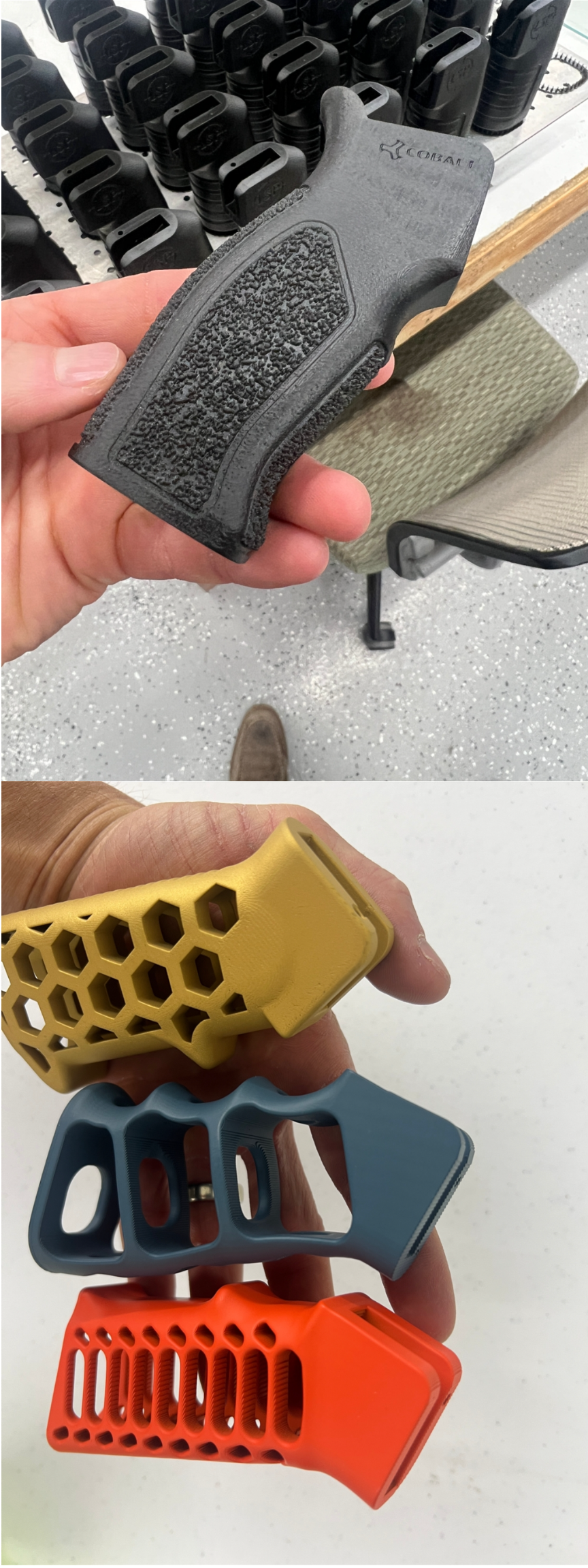
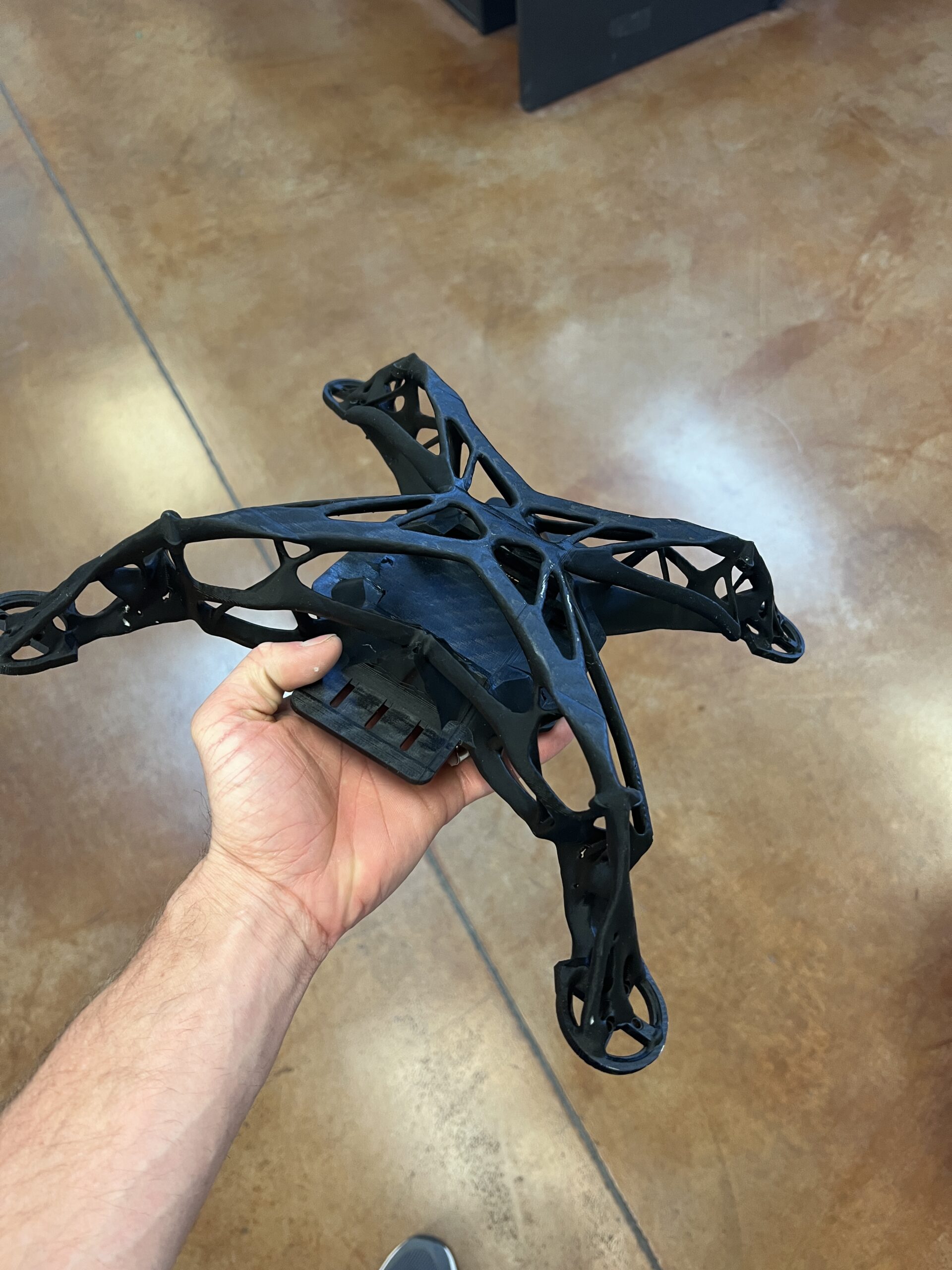
There is no mold on earth that can make the part in this photo. That is not a boast about our printers. It is a statement about geometry, and it is worth understanding even if you will never build a drone.
What molding actually demands
Injection molding is a brilliant process with a strict rulebook. Every surface needs draft so the part can eject. The part must split along a parting line. Walls want to be uniform or the part sinks and warps. Undercuts cost you side-actions, and every side-action costs money and reliability. Good mold designers internalize these rules so deeply that most plastic parts are designed to them before anyone consciously decides anything.
The result: almost every part you have ever handled is shaped like what a mold can release, not like what the loads actually require.
What load-path geometry looks like
This drone frame came out of generative design. The software was given the mount points, the loads, and the mass budget, and it grew structure along the load paths. No draft angles, no parting line, no uniform walls. The lattice runs in every direction at once, present where the stress is and absent everywhere else.
We print two per build. For geometry like this, additive is the only manufacturing process that exists.
Why this matters for ordinary parts
Most of our customers are not flying anything. The lesson still transfers, in three ways:
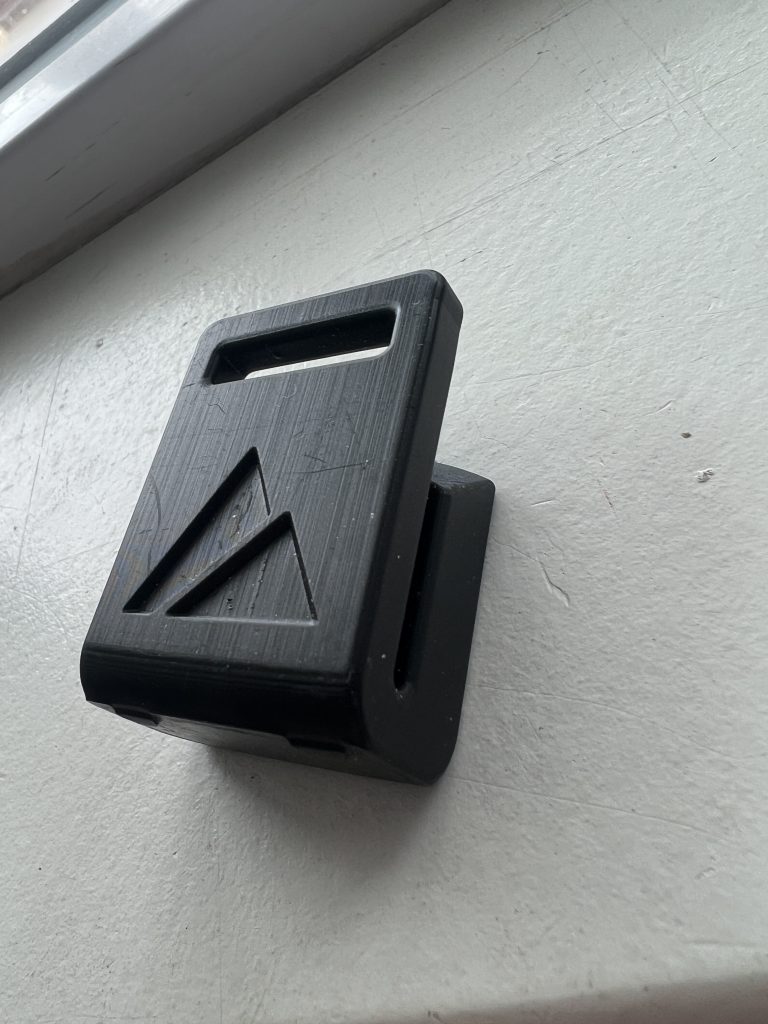
- Consolidation. When draft and parting rules disappear, assemblies collapse. Brackets, clips, and housings that were three molded parts and two fasteners become one printed part. Fewer part numbers, fewer failure interfaces, less assembly labor.
- Material where it matters. You do not need generative software to benefit. Simple ribbing, lattice infill, and selective thickening let a printed part hit the same stiffness at a fraction of the material, which shows up directly in the per-part price.
- The shelved version. Nearly every engineering team has a design that was drawn the way they wanted it, then rationalized into moldability. That first version is usually the better product. It has simply been waiting for a process without a rulebook against it.
For the practical design rules on our machines, start with Quit Drawing Molded Parts and the companion piece on what production SLA tolerance really holds.
Get a number for your part
Upload the wild version, the one tooling said no to, for an instant estimate, or talk to a real person about what consolidation could take out of your assembly.