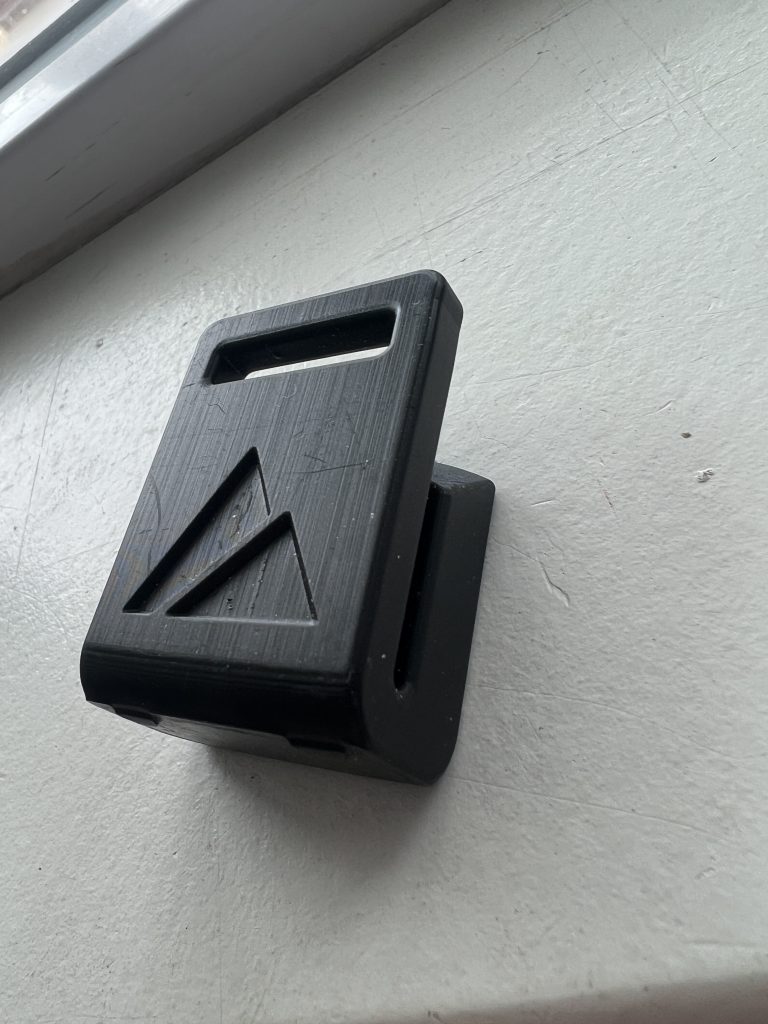
The Bucket Block by Backslope Outdoors turns webbing and a five-gallon bucket into a carry system. Look at the photo: the surface, the crisp logo, the clean edges. Every instinct says injection molded. It has never seen a mold.
The problem
Consumer outdoor products live on spiky demand. Retail seasons, promotions, and a good review can triple orders for a quarter and then let them rest. Tooling forces an ugly choice onto that curve: size the mold and press time for the peak and watch the capital sit idle the rest of the year, or size for the average and miss the moment the product takes off. The usual hedge is a warehouse full of inventory built ahead of demand, which is just the same cost wearing a different name.
What we did
We print the Bucket Block 108 to a build plate across a bank of machines in Price, Utah. When the order book calls for it, that bank produces on the order of 10,000 units a day. When it does not, the same machines print other products entirely, for Backslope or for anyone else.
That is the part of additive economics that surprises people most. Capacity is a property of the fleet, not of a tool dedicated to one SKU. Nothing sits idle, nothing is amortized against a single product, and production tracks actual demand instead of a forecast made a year ago. We walked through the underlying math in How MOQ-Free Manufacturing Works.
The numbers
- 108 parts per build plate
- Surge capacity on the order of 10,000 units per day
- 0 dedicated tooling, 0 idle capital between peaks
- Inventory built to demand, not to a forecast
Molded looks without the mold
The other thing this part proves is cosmetic. Production printing has reached the point where a consumer-facing part, logo and all, holds retail-shelf surface quality straight off the process. If the last time you evaluated 3D printed surface finish was a few years ago, it is worth looking again.
Get a number for your part
Upload a CAD file for an instant estimate, compare it against your tooling-plus-warehousing math, or talk to a real person about demand-matched production.