A part that quotes at $4.10 from an overseas supplier and $5.30 from a domestic one is not actually a $1.20 decision. It looks like one on the line item. It almost never is one by the time the part is in your hand and on your line.
The number that matters is not unit price. It is total landed cost — what the part actually costs you once every line of the invoice, plus a few lines that never make it onto the invoice, are added up. In 2026, several of those hidden lines are growing fast, and they are worth pulling into the light before you decide where a part gets made.
Unit price is one line on a long invoice
Total landed cost is the all-in cost to get a finished, usable part to your dock. Unit price is the first line. The rest of the stack typically includes freight, duties and tariffs, customs and brokerage, inspection and quality control, inventory carrying cost, and a risk premium for the things that go wrong across a long supply chain. Each line is easy to wave off on its own. Together they routinely add 20 to 40 percent — sometimes far more — to that tidy unit price.
The reason the cheap quote wins so often is simple: the unit price is concrete and lands in the first email, while the other costs are diffuse, delayed, and show up on someone else’s budget. They are real all the same.
The lines that are moving in 2026
Two of those hidden lines are climbing right now. The first is tariffs. As of this year, the large majority of manufacturers — by one survey, 86 percent — are passing at least part of their tariff costs through to customers rather than absorbing them. If your supplier is overseas, that increase is riding inside your unit price whether or not it is itemized. In one documented case, a company’s landed cost rose roughly $4.2 million a year once tariff rates spiked on the goods it was importing.
The second is raw materials. Input prices rose about 5.4 percent last year and are projected up another 4.4 percent this year. That pressure hits every supplier, but it compounds with freight and duty on an imported part in a way it does not on one made down the road.
Carrying cost is the silent killer
The line that quietly does the most damage is inventory carrying cost — the price of owning parts that sit on a shelf waiting to be used. Industry estimates put it at 20 to 55 percent of the item’s value per year, once you count warehouse space, capital tied up, insurance, obsolescence, and shrinkage. A part you bought cheap and held for eight months may have given back its entire unit-price advantage just sitting there.
Overseas sourcing tends to force that problem. Long lead times mean you order early and hold buffer stock so a delayed container does not stop your line. Minimum order quantities make it worse — you needed 500 parts, but the economical buy was 5,000, so now 4,500 parts sit in a rack as cash you cannot spend, depreciating, until you need them. If you ever need them.
Lead time deserves its own line, even though it rarely gets one. Every week between placing an order and using the part is a week your cash is committed and your options are closed. When a domestic shop turns the same part in a fraction of the time, that compressed lead time is real money: less buffer stock, fewer expedite fees, less risk of a stockout idling a line downstream. It just never shows up as a number on the cheap quote.
What domestic print-on-demand zeroes out
This is where making the part domestically, on demand, changes the arithmetic — not by shaving the unit price, but by deleting whole lines from the stack.
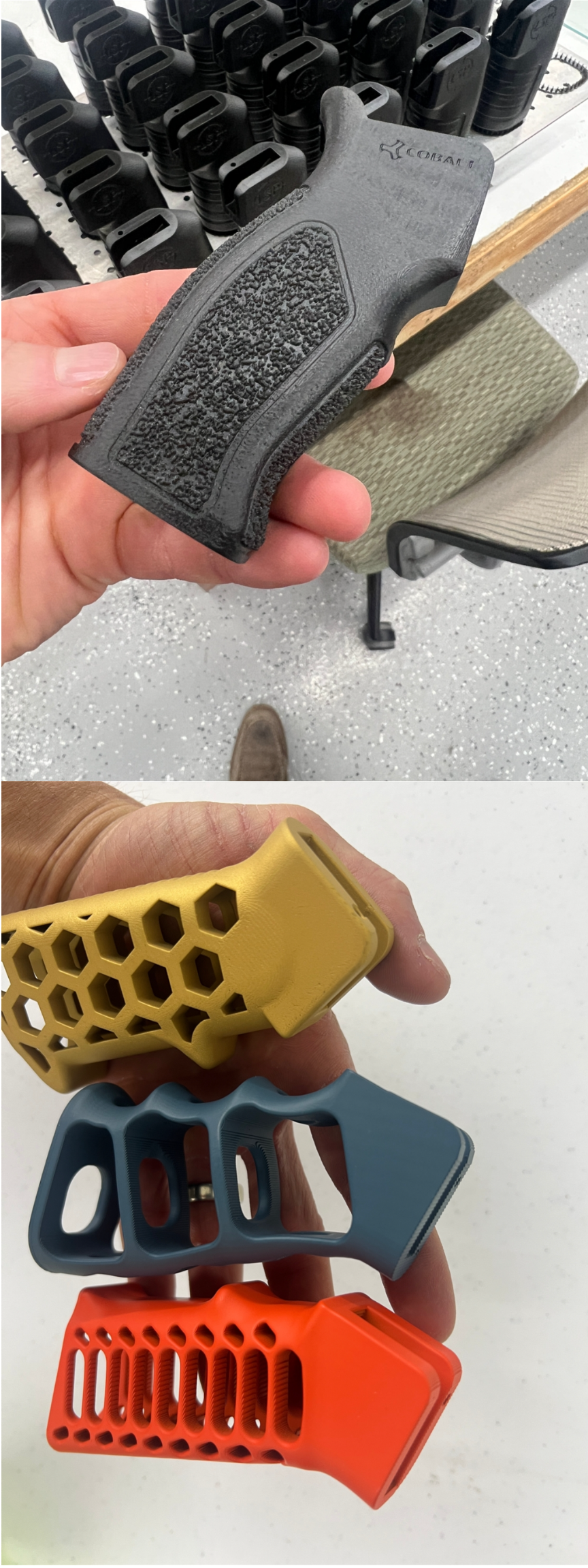
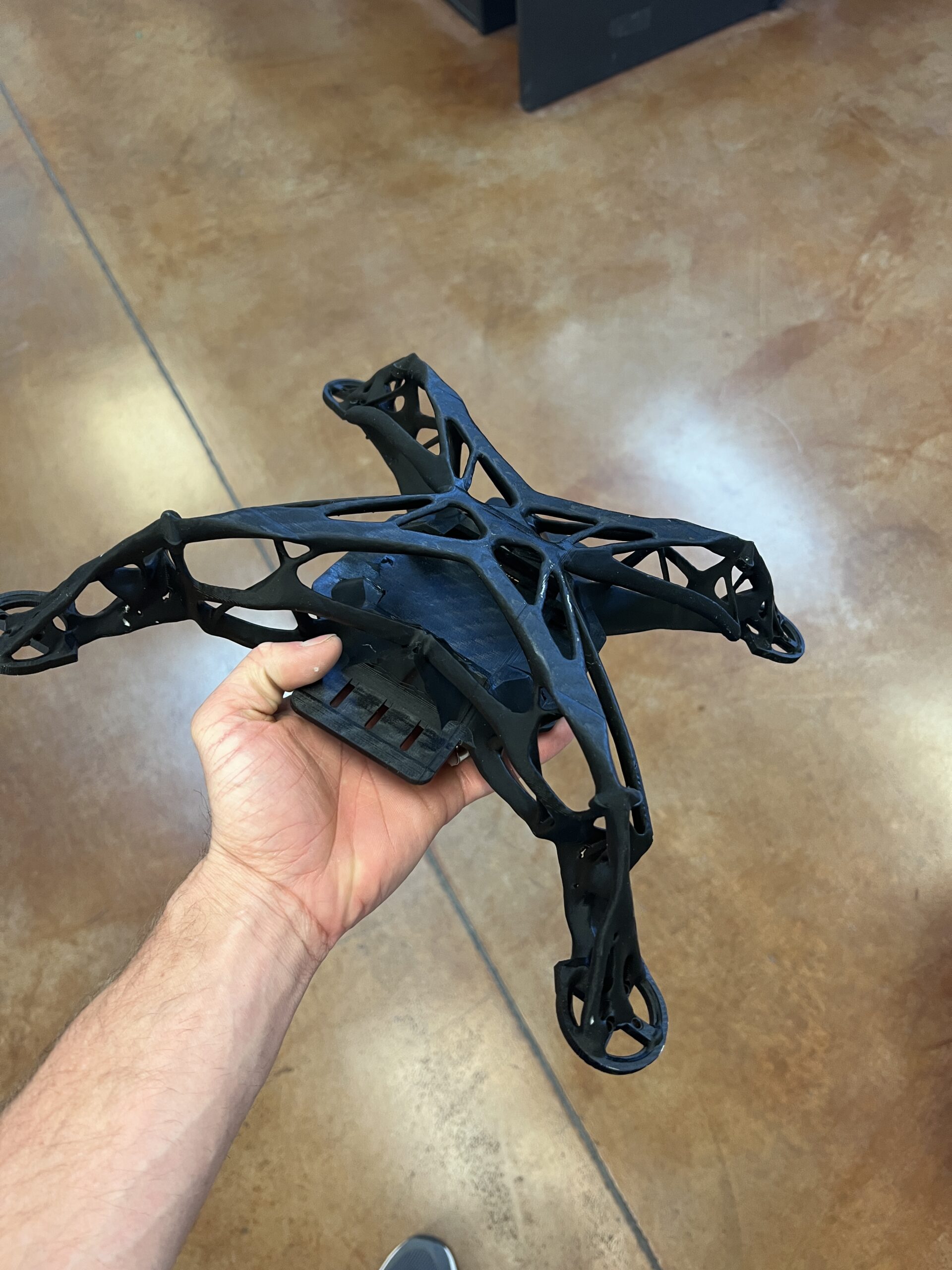
No ocean freight and no customs, because the part does not cross a border. No tariff exposure, for the same reason. No minimum order quantity, because there is no tooling to amortize and no batch to justify, so you can order the 500 you actually need. And carrying cost falls toward zero when you print to the order instead of forecasting a year of demand into a warehouse. A digital file does not take up a rack or tie up capital. You make the parts when the order lands, and the next batch waits as data, not inventory.
Add it up and the comparison flips more often than the unit-price view suggests. The $5.30 part with nothing behind it can easily beat the $4.10 part dragging freight, duty, a six-week lead time, and 4,500 units of dead stock behind it.
Run the whole number
None of this means domestic always wins, or that unit price does not matter. It means unit price is the start of the calculation, not the end of it. Before you place an order on the strength of the cheapest quote, run the part all the way to your dock and across a year of holding it. Add the freight, the duty, the lead time, the carrying cost, the order quantity you did not want. The cheapest unit price and the cheapest part are rarely the same number — and lately, the gap between them has been widening.
Ready to see what your part would cost? Upload a CAD file for an instant estimate, see what we run on our capabilities and materials pages, or talk to a real person about your project.