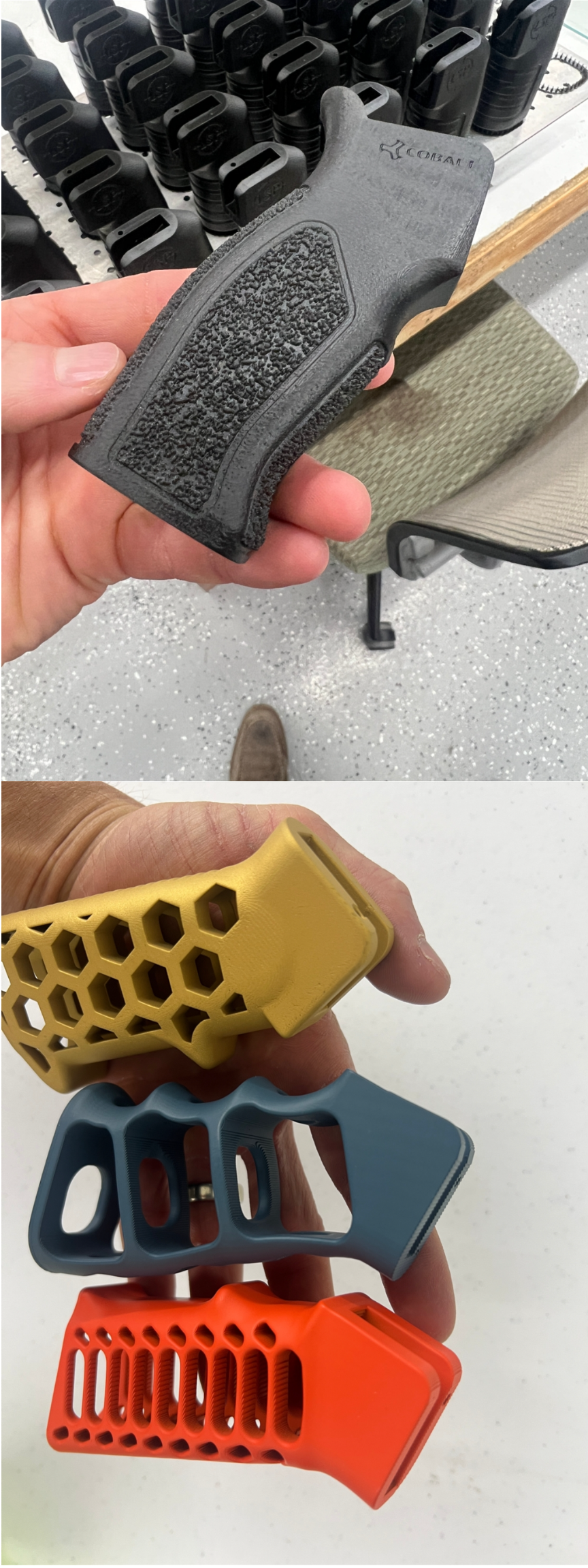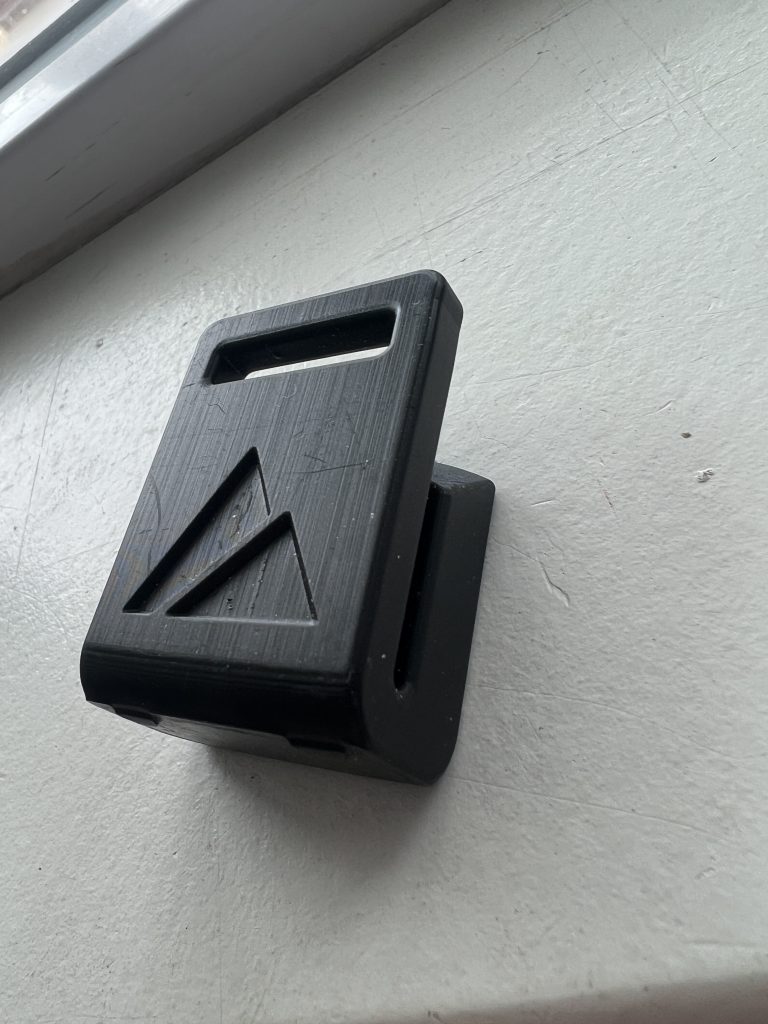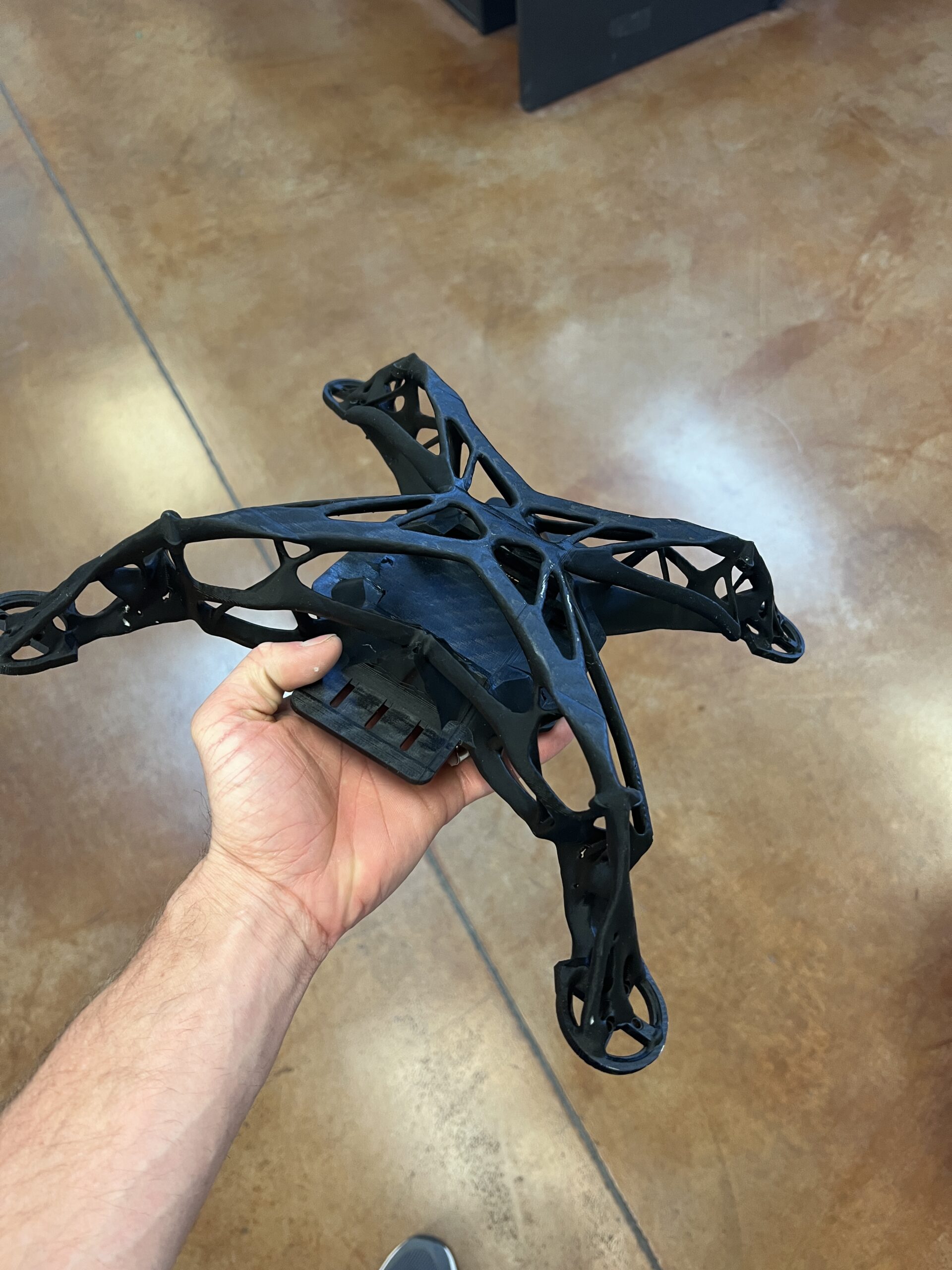
Two black parts are sitting on the bench in front of me, same geometry, printed the same morning. One is DL110, a rigid high-impact resin we run every day. The other is DL401, a heat-resistant formulation. You cannot tell them apart by looking. Leave them both on a dashboard in July and the difference shows up fast: one softens, and one holds shape past temperatures that would ruin most plastics on the market. Drop them on concrete and the ranking flips.
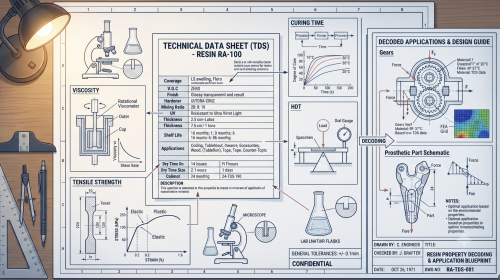
Every one of those differences was printed on their datasheets the whole time, in rows most people skim past. A resin datasheet is honest if you know its dialect. Here is how we read one when picking a production material, using real numbers from materials on our own materials page.
HDT — will it hold shape when it gets warm
HDT, heat deflection temperature, is the temperature at which a standard test bar starts to bend under a fixed load. Our tables list it at 0.455 MPa of load. It is a sag number, a “when does this start losing stiffness” number, and it is a far better guide to real-world heat behavior than any max-temperature marketing line.
| Resin | HDT @ 0.455 MPa | What that means in practice |
|---|---|---|
| Durable | 45 °C | Indoor parts. A parked car in a Utah July will find its limit. |
| DL110 | 75 °C | Most consumer and industrial duty, fine. |
| IND 406 | 107 °C | Warehouse summers, enclosed electronics, hot-side brackets. |
| PA12 nylon (SLS — selective laser sintering) | 171 °C | Serious thermal duty in a nylon. |
| DL401 | 270 °C | The outlier. Fixtures and parts that live near real heat. |
The habit to build: read HDT against the hottest hour of the part’s life, not the average.
Tensile strength vs. tensile modulus — strong is not the same as stiff
These two get merged into “strength” in casual conversation and they answer different questions. Tensile strength (MPa) is the stress where the material breaks or yields. Tensile modulus (also MPa, but thousands of it) is stiffness — how hard the material fights being flexed at all.
DL401 has a modulus of 3,180 MPa; it feels like glass-filled plastic and barely flexes. DL110 sits at 2,100 MPa, stiff but with life in it. Durable drops to 1,570 MPa and you can feel the compliance in your hands. A bracket holding a sensor wants modulus. A clip that snaps over a rail wants a little give, and too much stiffness there is how clips die.
Elongation at break — the drop test in a number
Elongation at break is how far the material stretches before it snaps, and it is the single most predictive datasheet row for “will this survive being dropped, stepped on, or pried.” Low elongation means rigid and unforgiving. High elongation means the part bends and comes back.
| Resin | Elongation at break | Character |
|---|---|---|
| DL401 | 5% | Rigid, brittle under impact. Its job is heat. |
| DL110 | 28% | Tough rigid. Our production workhorse. |
| Durable | 30% | Flexes under strain, returns to shape. |
| DL170 | 185% | Impact-eating. Bounces where others crack. |
| DL220B | 211% | Rubbery, Shore 80A. A different world entirely. |
The datasheet gets you to a shortlist. It does not pick your winner — we’ve argued before that the drop test comes before the datasheet for any part that lives a physical life. Print candidates in two or three resins and throw them at the floor. The floor is honest.
Shore hardness — check the letter before the number
Shore hardness comes in scales, and the letter matters more than the number. Shore D is the scale for rigid plastics; Shore A is the scale for rubbery materials. DL110 at 86D is a hard plastic. DL220B at 80A is a firm rubber, roughly skateboard-wheel territory. An “80” with no letter attached is a meaningless number, and cross-scale comparisons are where material selection goes wrong quietly.
Water absorption — the sleeper spec
Resins drink. Some sip: DL401 absorbs 0.28%, DL110 about 0.62%. Some gulp: IND 402, a flexible formulation, takes on 3.62%. A part that lives wet or humid swells and softens as it absorbs, which shows up as dimensional creep and lost stiffness months after the part shipped. For outdoor gear, boat hardware, and bathroom products, this row matters more than almost anyone expects. We once ran an R&D study on a water-absorbing resin on purpose, which taught us plenty about what water does to the ones that aren’t supposed to.
What the datasheet will not tell you
- Fatigue. One pull to failure says little about the ten-thousandth actuation of a snap fit.
- Print direction. Test bars are printed in a favorable orientation. Your part’s weakest axis may not match theirs.
- Cure state. Numbers come from fully post-cured coupons. An undercured part is a different material.
- Aging. UV and heat change polymers over years, and the sheet is a photograph of day one.
- Test method drift. One manufacturer publishes ISO bars, another ASTM, and the same polymer can post different numbers under each standard. Compare resins within one maker’s sheet freely; compare across makers with a grain of salt.
The sheet describes an ideal coupon on its best day. Production means qualifying the material in your geometry, in your use case, which is cheap to do when printing five test parts costs a few dollars and an afternoon.
Back to the two black parts on the bench. Read elongation first to learn how the part fails. Read HDT second to learn where it can live. The other rows are refinement, and refinement is what the test prints are for.
Ready to see what your part would cost? Upload a CAD file for an instant estimate, see what we run on our capabilities and materials pages, or talk to a real person about your project.