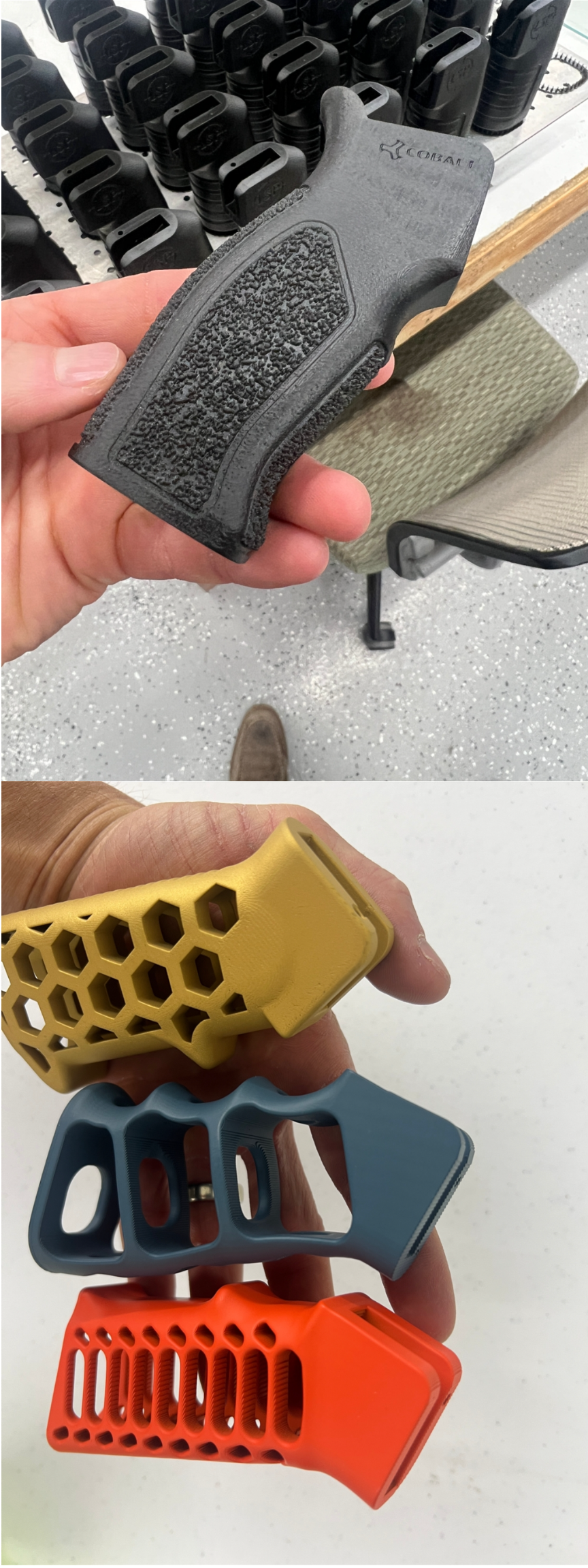
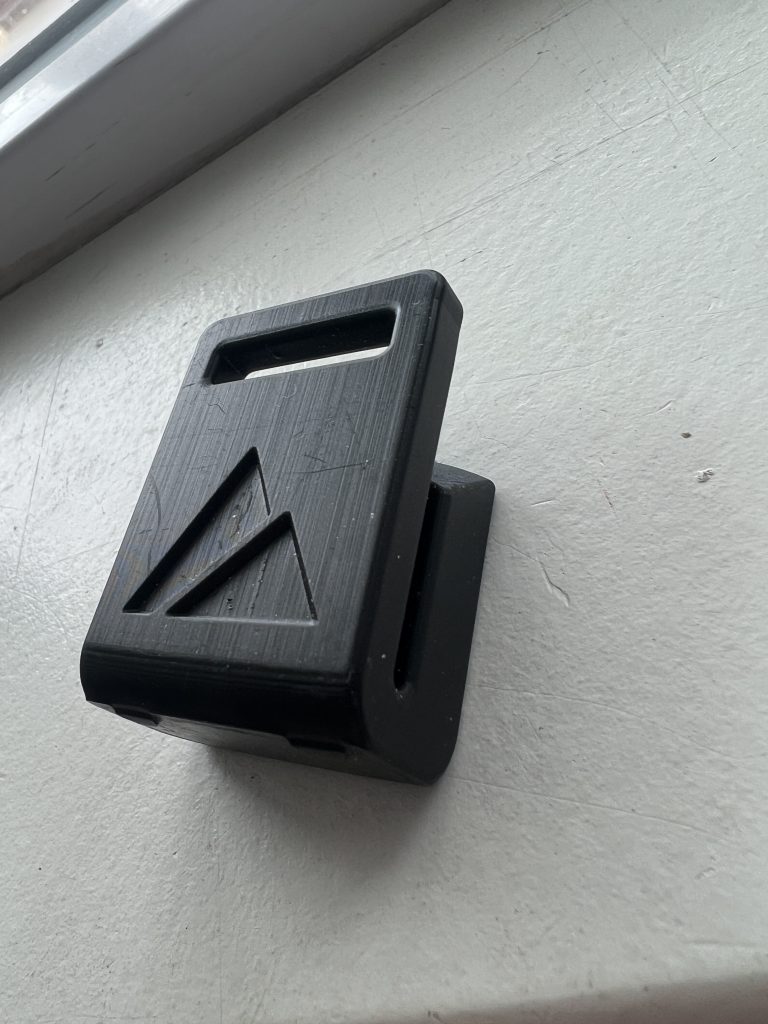
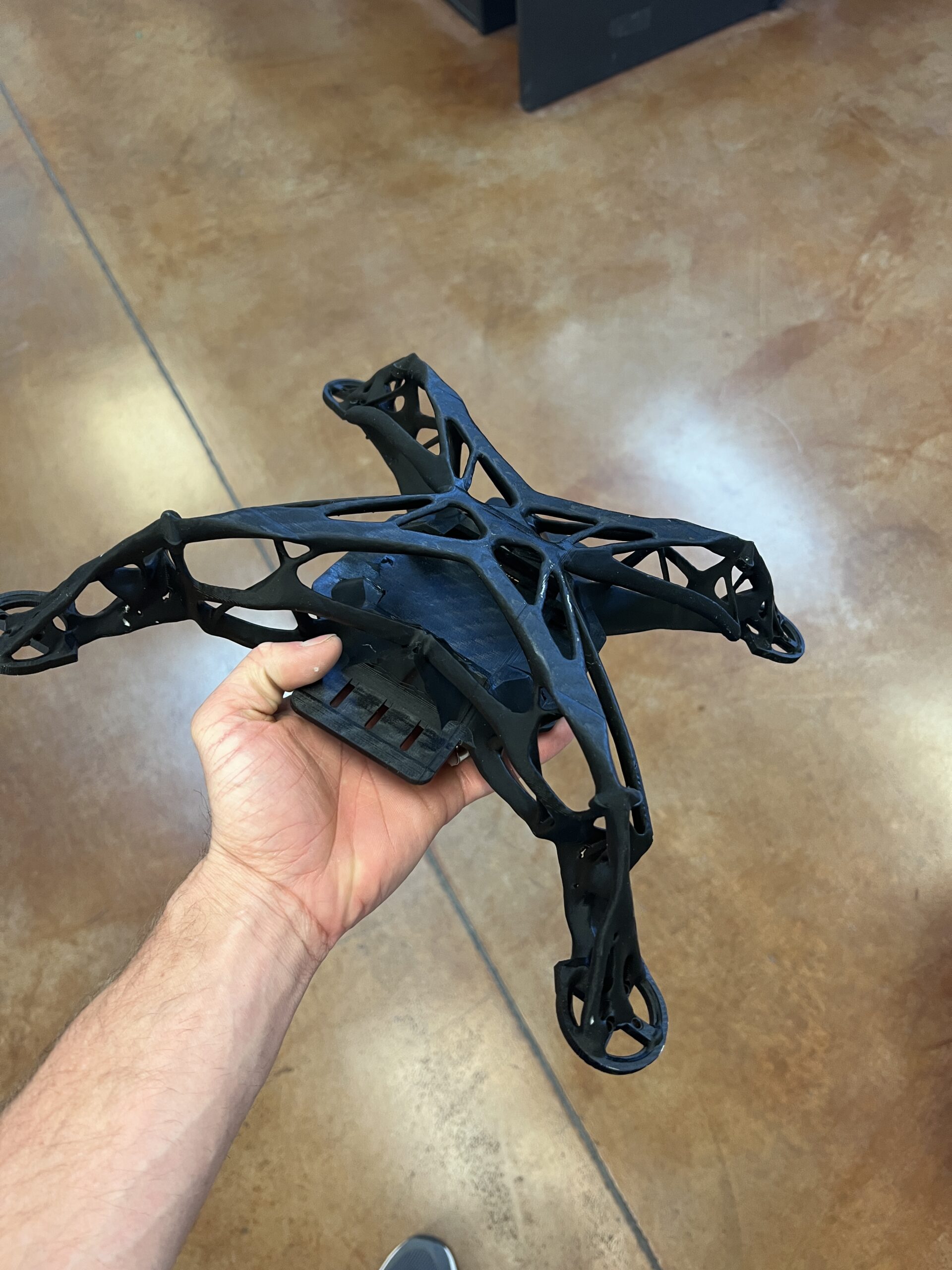
A few weeks before Formlabs took the wraps off the Fuse X1, a handful of us got to stand in front of one. Early-access tours are a strange experience for a production shop. You’re looking at a machine that doesn’t officially exist yet, and the whole time you’re mentally walking the aisles of your own floor, figuring out where it would sit and what it would change.
Today it’s official. Formlabs announced the Fuse X1, an SLS (selective laser sintering) printer aimed squarely at high-volume manufacturing. We run a fleet of Fuse printers in production here in Price, Utah, so this isn’t an announcement we’re reading from the outside. Here’s what we saw, and what high-volume SLS actually requires once the press release fades.
What Formlabs announced
If you’re new to the process: SLS printing works by spreading a thin layer of nylon powder across a build chamber, then using a laser to fuse each cross-section of the part into the layer below. The unfused powder stays in place and supports the parts as they grow, which means no support structures and, more importantly, no rule that says parts have to sit side by side on a flat plate. You can nest parts in three dimensions, stacked through the full volume of the chamber. That one property is most of why SLS is a production technology and not just a prototyping one.
The Fuse line brought that process down to a footprint and price a working shop could scale one machine at a time, which is exactly how we built our fleet. The X1 is Formlabs’ move up the volume curve. We’ll leave the spec sheet to Formlabs, since it’s public now and worth reading on its own. What matters from where we stand is the intent behind the machine: this one is designed around the assumption that it will run every day, all day, for years, in a shop that bills by the part.
What stood out in person
We’ll keep the tour details general and let Formlabs tell their own story. But impressions are fair game, and the strongest impression was this: the X1 reads like it was designed by people who have watched real shops run Fuse fleets. The attention isn’t all on the build itself. It’s on the unglamorous stretches around the build, the powder handling, the turnaround between jobs, the goal of keeping the machine printing instead of waiting on a person. Not to mention we were blown away by how large it was! having a fleet of these would change our game dramatically!
Anyway, that sounds mundane. It’s the whole game. Anyone who has run SLS in production knows the printer is usually the most reliable thing in the room. The workflow around it is where throughput goes to die.
The throughput math nobody puts in a press release
Print speed is the number everyone quotes, and on its own it’s the one that matters least. When we quote a production SLS job, the figure we care about is parts per build, not hours per part. A chamber nested tight changes the economics of a job more than a faster laser does.
Then there’s the powder loop. Nylon powder degrades with heat exposure, so every build runs on a blend of fresh and recovered material, and the refresh rate sets a real cost floor on every part you make. Recovered powder has to be sieved, blended, and fed back into the system, and that’s labor. So is depowdering, the step where finished parts come out of the build cake and someone gets the powder off of them and out of every internal channel. None of that shows up in a machine announcement, and all of it shows up in your cost per part.
So when a manufacturer says a new machine targets high-volume production, the question we ask isn’t how fast it prints. It’s how much of that surrounding loop the machine and its ecosystem take off our hands, and how many hours per week each unit actually spends fusing powder. Uptime across a fleet beats peak speed on a demo, every time.
Where this fits against injection molding
Honest answer: if your design is frozen and you need hundreds of thousands of the same part, injection molding still wins, and we’d tell you that even though we’re a 3D printing company. Molding’s cost per part at high volume is the result of a century of refinement, and no powder bed changes that math yet.
But there’s a wide stretch of territory below that, and it keeps getting wider. Bridge production while your tooling is being cut. Products that revise faster than a mold can pay itself off. Part counts in the hundreds or low tens of thousands, where tooling cost never amortizes. Geometries a mold can’t release. That’s the territory SLS already owns, and every step up in throughput, the X1 included, pushes the boundary line further into volumes that used to belong to tooling by default.
Standing in front of the X1 on that tour, the feeling wasn’t that everything changes overnight. It was quieter than that. We were looking at the next machine while our current ones were back home fusing powder through the night shift, and the distance between those two things, between announcement day and a machine earning its keep in a real production schedule, is measured in months of unglamorous work. That gap is where we live, and honestly, it’s the part of this industry we like best.
Ready to see what your part would cost? Upload a CAD file for an instant estimate, see what we run on our capabilities and materials pages, or talk to a real person about your project.