Buried in Carbon County’s economic-development materials is a sentence that almost no one outside of Price has ever read. The county lists, among the alternative industrial uses for its naturally abundant coal, the production of carbon fiber and coke. That’s it — one line on a page about diversification. But it points at one of the more interesting reshoring questions in U.S. advanced manufacturing: where the carbon fiber for the next generation of composites is going to come from.
Right now, the answer is mostly China and Japan. That’s an answer the Department of Defense and a growing class of industrial customers are increasingly unwilling to live with. The question of what comes next is sitting in plain sight on a county website.
The chemistry, briefly
Carbon fiber today is made primarily from polyacrylonitrile, or PAN — a synthetic polymer precursor that gets spun into fibers, stabilized in air, and then carbonized at high temperatures. PAN-based fiber is what shows up in aerospace structures, wind turbine blades, and high-end automotive parts. It’s the dominant material class globally, and it’s the one that depends most heavily on Asian production.
There’s a second feedstock route that has been understood since the 1960s but never industrialized at scale in the U.S.: pitch-based carbon fiber. Pitch precursors come from petroleum residues or from coal tar — a byproduct of producing coke from coal. Pitch-based fibers have different properties than PAN-based fibers: higher modulus, higher thermal conductivity, better in some structural and thermal-management applications, weaker in others. They’re a real material class with real industrial demand, particularly in defense and aerospace.
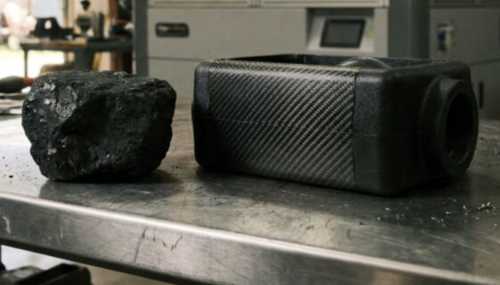
Coal-derived pitch is the part of the picture that lines up with Carbon County’s industrial document. The county isn’t claiming it can compete with PAN-based fiber for general aerospace structures. It’s noting that one of the input streams for an entire branch of advanced composites can come from what it already has under the ground.
Why this matters for AM right now
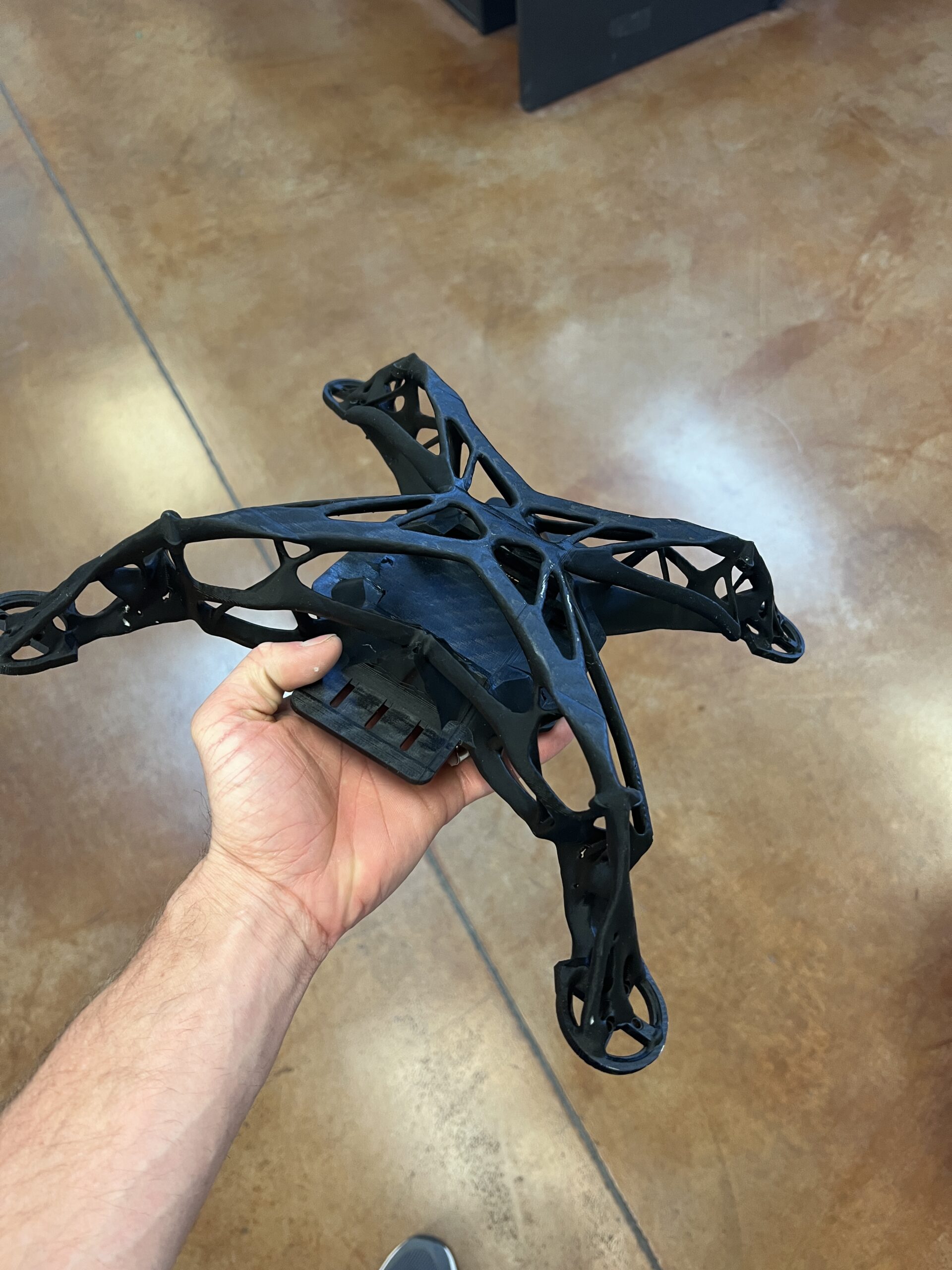
Carbon-fiber-reinforced polymers — CFRPs — are one of the active material classes in additive manufacturing. Filament-format and pellet-format chopped-fiber composites run on production AM systems. Markforged’s Onyx, BigRep’s CFR formulations, Stratasys’s carbon-fiber-filled Fortus materials, and a long list of other commercial offerings are in shop floors today. Continuous-fiber AM, where fiber is laid down in directed paths through the printed part, is a smaller but rapidly growing category that’s landing on real aerospace and defense programs. Continuous Composites’s recent multi-year contract with the U.S. Army DEVCOM Aviation and Missile Center is one example among several.
All of this depends on a carbon fiber supply chain. As long as that supply chain runs through China, Japan, and a handful of Korean producers, the AM industry’s growth in defense and aerospace composites carries an asterisk: the inputs are not domestically sourced. DoD has been increasingly clear that for components going into critical platforms, that asterisk has to come off.
The hard parts
None of this means a Utah carbon-fiber industry shows up next year. Moving from coal to pitch to fiber at industrial scale requires capital that isn’t currently lined up. The coke industry, which historically produced coal-tar pitch as a byproduct, has been shrinking in the U.S. for decades. Standing up a modern pitch-based carbon-fiber line from a Utah coalfield would require an integrated coke-and-pitch pipeline, a fiber-spinning and stabilization line, and an offtake customer base willing to qualify the resulting fiber for production use. Each of those is its own multi-year program.
There’s also a quieter risk that gets less attention. The fiber would need to meet the modulus, tensile, and quality-consistency specs that aerospace and defense buyers expect. Pitch-based fiber has a quality-control reputation to overcome, mostly stemming from earlier-generation production techniques. Modern process control changes that math, but proving it out takes time.
What’s actually on the table
So why is the hypothesis worth taking seriously? Three reasons.
First, the policy and capital tailwinds are aligned with this kind of pipeline in a way they weren’t a decade ago. Defense Production Act Title III allocations, the Office of Strategic Capital’s investment programs, and the broader reshoring policy environment are all explicitly looking for opportunities to fund domestic critical-materials pipelines. Carbon fiber is recognized as one.
Second, Carbon County already has the feedstock. The county’s bituminous coal seams, the rail and trucking infrastructure built around coal export, and the existing industrial workforce are real assets. The economic-development document isn’t a wish list. It’s an asset inventory.
Third, the downstream demand is here. Additive manufacturing in defense and aerospace is the fastest-growing consumer of advanced composites in the U.S. industrial base. The drones, missile platforms, and aircraft components that the AM industry is now supplying need carbon fiber. Right now most of that fiber comes from Asia. The supply chain wants to come home.
The Merit3D angle, briefly
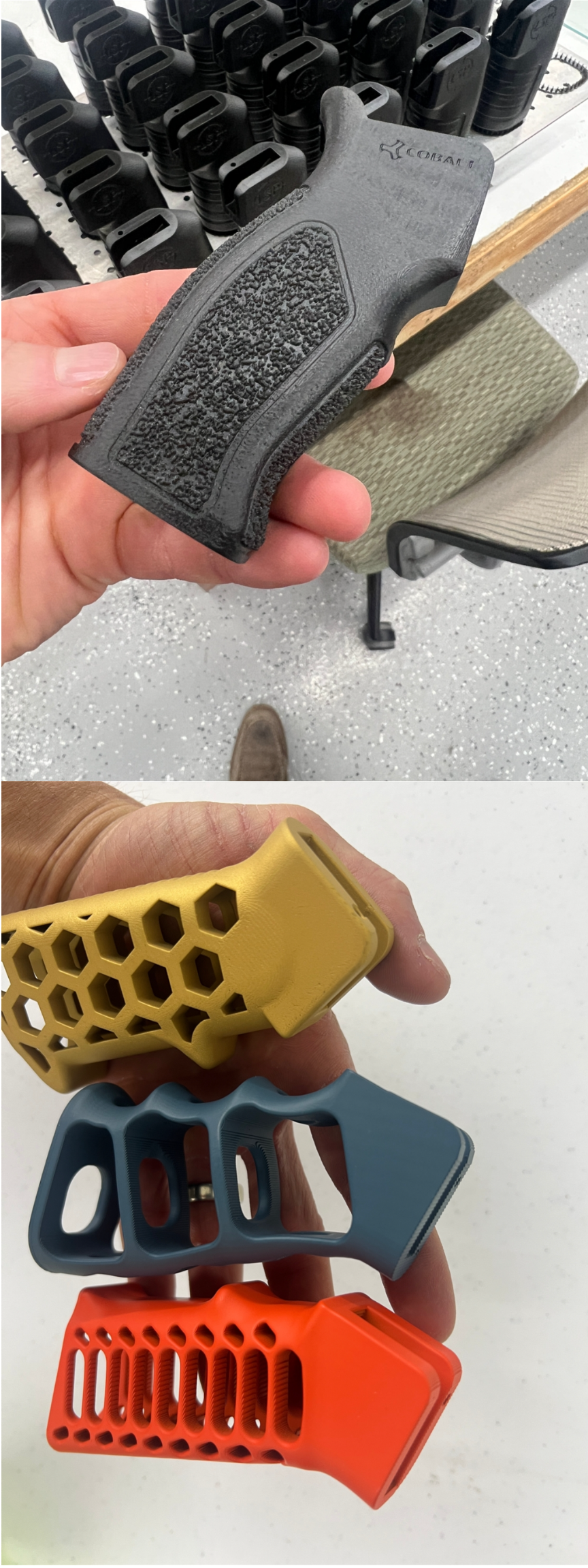
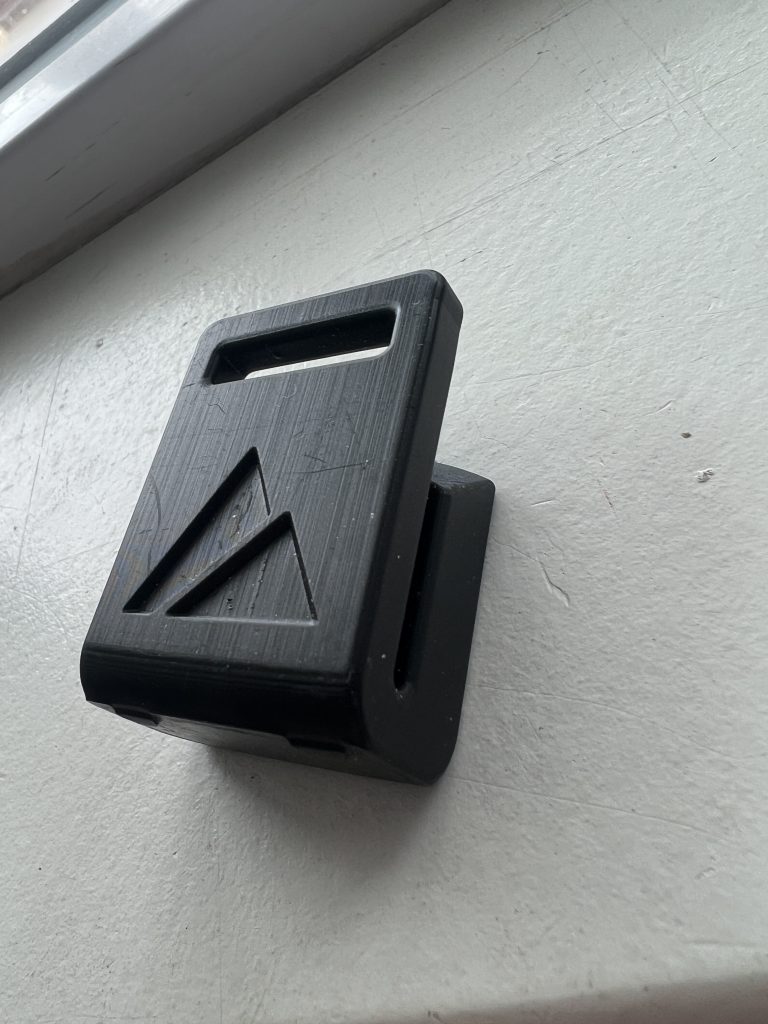
We run advanced carbon-fiber-reinforced composites right on our production floor using our Formlabs Fuse industrial SLS fleet. While traditional filament-based 3D printing often suffers from weak Z-axis layer lines, our powder-bed fusion setup utilizes materials like Nylon 11 CF to deliver highly complex, structurally sound, isotropic end-use parts.
Right now, the engineering materials we feed into our industrial printers rely entirely on global supply chains. We buy our material from suppliers who buy their raw fiber from overseas. That makes us a bit biased about whether this domestic pipeline gets built.
We are also accidentally well-positioned to be a downstream proof point if it does. If a carbon-fiber pipeline ever stands up in Carbon County, the advanced composites supply chain for U.S. additive manufacturing starts about thirty miles from our shop floor. That isn’t a thesis Merit3D is making. It’s a hypothesis the county itself has been quietly publishing for years, and the conditions for someone to act on it are closer than they’ve ever been.
Ready to see what your part would cost? Upload a CAD file for an instant estimate, see what we run on our capabilities and materials pages, or talk to a real person about your project.