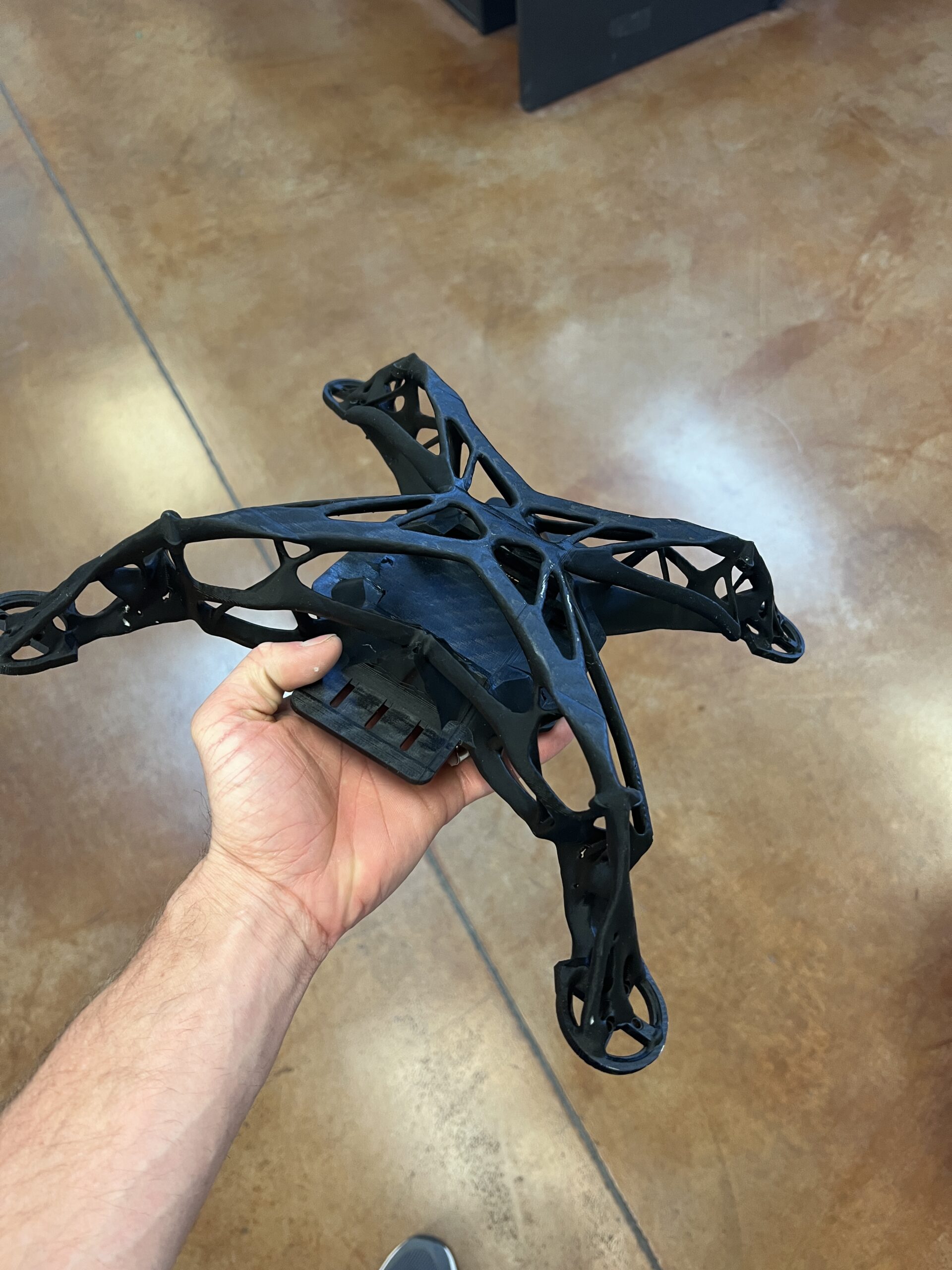
On June 26, the National Nuclear Security Administration (NNSA — the semi-autonomous agency inside the Department of Energy that oversees the nation’s nuclear stockpile) pulled the sheet off a flight vehicle called Aires Tide. It had already flown twice, back in May, at Dugway Proving Ground out on the west desert of Utah. Both flights were live drops from 32,000 feet. Both were successful.
What made the announcement land, at least for people in this industry, was not the vehicle. It was how it got built. Aires Tide is the first proof-of-concept out of the Genesis Mission, the White House initiative launched in November 2025 to compress the design-to-flight timeline for defense systems. The workflow combined AI-assisted design, high-performance computing across three national labs — Venado at Los Alamos, El Capitan at Lawrence Livermore, and the pipeline at Sandia — and additive manufacturing as the production layer for the hardware that flew. The reported numbers were one-fifteenth the cost and one-seventh the timeline of a conventional program of similar scope.
Brandon Williams, the NNSA Administrator, framed it plainly in the release: combining AI, high-performance computing, and additive manufacturing while keeping human judgment firmly at the center. Read that quote a second time and notice what it does not say. It does not say prototype. It does not say demonstration article. It says production layer, in a program that just flew twice at Dugway.
That is the sentence worth sitting with. The federal government, at a policy level, publicly acknowledged that additive manufacturing has moved from the model shop to the flight line.
What AS9100 actually is, in plain English
AS9100 is the quality management standard for aerospace. If you know ISO 9001, the general international standard for quality management systems, AS9100 is that standard with an aerospace layer stacked on top. It was written by the aerospace industry, for the aerospace industry, and it is administered through the International Aerospace Quality Group.
The extra layer covers what aerospace cares about beyond generic quality: formal risk management, product traceability from raw material to shipped part, configuration control so a Rev C part cannot get mixed into a batch of Rev D, counterfeit-part prevention, and first-article inspection that proves the first part off a new setup matches the drawing before the next thousand come off behind it.
The audit itself is not a form you fill out. It is a multi-day, on-site review by an independent Certification Body accredited under the IAQG’s Industry Controlled Other Party (ICOP) scheme — the framework primes like Boeing, Lockheed, and Northrop lean on for supplier quality-system certification. The auditor pulls records, follows a part backward through the shop, asks the operator on the floor to explain why a step exists, and looks for the moments where paperwork and reality drift apart. That drift is where certifications fail. (NADCAP, the National Aerospace and Defense Contractors Accreditation Program administered by the Performance Review Institute, is a separate audit system that covers special processes — heat treat, welding, coatings, non-destructive testing, and now additive manufacturing itself. AS9100 covers the shop’s overall quality system; NADCAP covers the specific processes inside it.)
Recertification happens every three years, with surveillance audits in between. It is not a one-time achievement. It is a running commitment to keep the system honest.
What the certification actually enables
The point of AS9100 is not the plaque on the wall. The point is that it is the entry ticket to work that would otherwise be closed off.
Most tier-1 aerospace primes — the companies that hold direct contracts with the Department of Defense or NASA — require AS9100 to be on their approved supplier list at all. Tier-2 suppliers, the ones who sell to the primes, mostly require it as well. Without the certification, a shop cannot legally ship a part into that supply chain no matter how good the part is. It is not a preference. It is a gate.
Downstream of the supplier-list question, AS9100 changes insurance posture, ITAR compliance posture (ITAR is the International Traffic in Arms Regulations, the U.S. framework that governs export of defense-related articles), and the shape of long-term customer relationships. Aerospace customers are not looking for a vendor. They are looking for a process they can audit and trust for the next decade. AS9100 is the language that conversation happens in.
Why additive manufacturing was not there for a long time
For most of AM’s history, the industry sat outside the aerospace quality conversation for a good reason. Additive was seen — fairly, at the time — as a prototyping technology. Build-to-build variance was high. Post-processing was inconsistent. The industry did not have a shared vocabulary for what process control looked like on a laser powder bed or a photopolymer vat.
Certification of additive as an aerospace production process is genuinely recent. Most of the meaningful movement has happened in the last five to seven years. NADCAP added an AM-specific audit criterion (AC7110/14) that lays out what plate-level process control has to look like for polymer and metal AM as special processes — how witness coupons get pulled and tested, what part-level traceability requires on an AM build, and where DfAM (design for additive manufacturing — designing the part around the process, not adapting a machined design onto a printer) intersects with configuration control. That AM special-process audit sits alongside AS9100, not inside it. A shop can be AS9100 certified with additive covered as a controlled process, and a shop can also carry the NADCAP AC7110/14 special-process accreditation on top of that. Aerospace primes increasingly ask for both.
Getting an AM shop through an AS9100 audit is a different animal than getting a machining or injection molding shop through one. The process is younger, the failure modes less well-cataloged, and the auditor has to see that the shop understands its own machines at a depth most job shops never developed. It is doable, and a growing number of shops have done it, but it is not free and it is not fast.
What Aires Tide changes
What the Aires Tide announcement changes is not the technology. The technology has been arriving for years. What it changes is the public signal.
Genesis Mission is a White House-level initiative. The vehicle that flew was assembled with additive as the production process, not as a prototype step ahead of a production process. The NNSA Administrator said the words on the record. That posture — federal, on the record, at policy level — is what tier-1 primes and their supply chains take as permission to accelerate the same conversations they have been having quietly for two or three years.
Certified additive as a flight-hardware production layer is now the assumed direction, not a debated one. That is what the announcement did.
The Merit3D angle
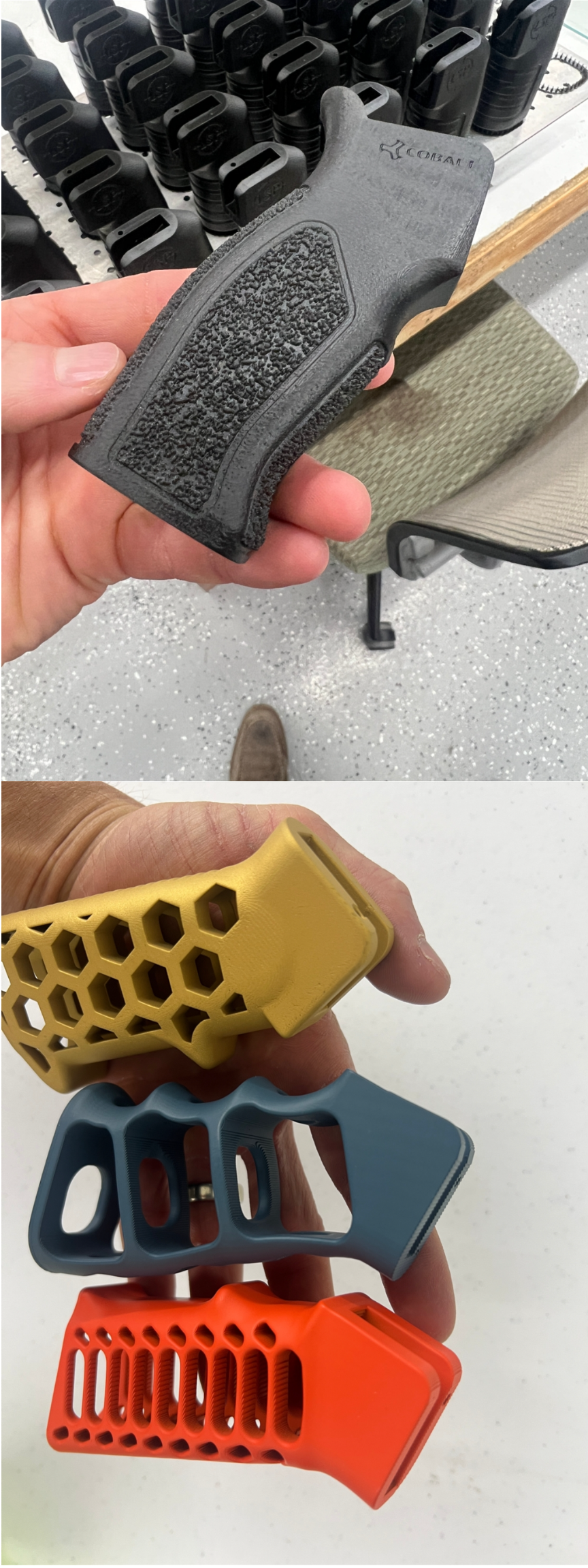
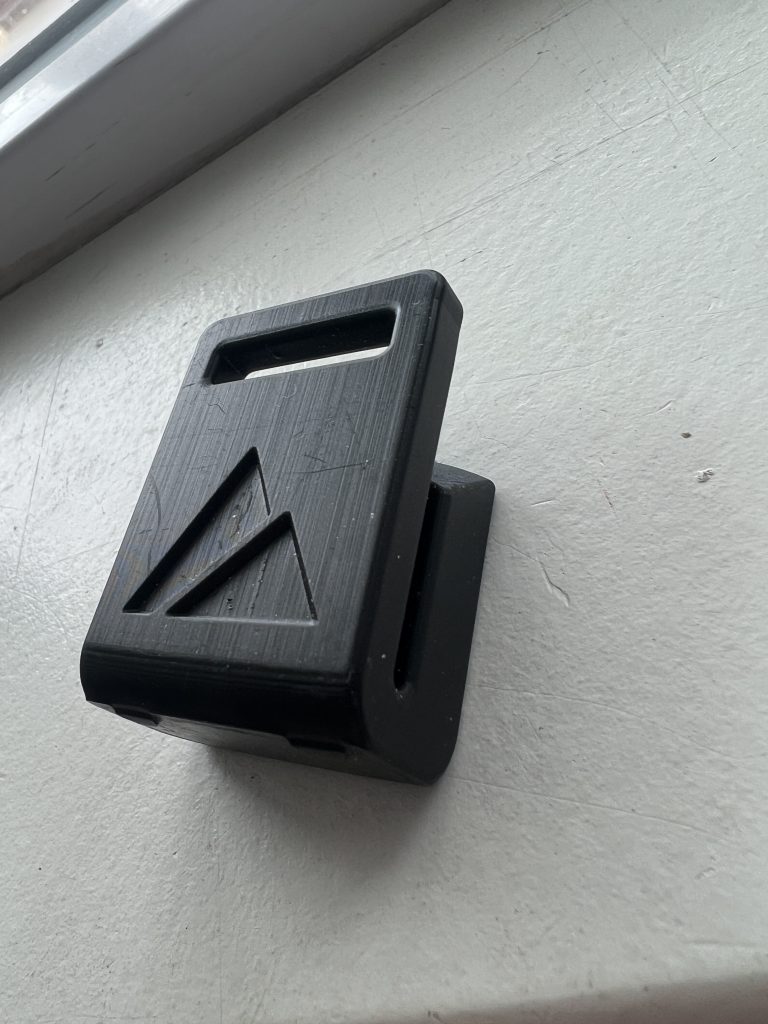
Merit3D is AS9100 certified and ITAR registered. We run polymer additive as a production process out of Price, Utah — Carbon County, three hours south of Salt Lake, on the same stretch of high desert where the labs test-drop hardware at Dugway and where the coal that powered the last century of American industry came out of the ground.
Our lane is polymer AM at production quantities — parts measured in the tens of thousands, not the ones. The aerospace and defense work we take on lives inside the same quality architecture the Aires Tide announcement puts a name on: process control on the plate, traceability part by part, configuration control from CAD revision through post-processing, first-article inspection at the front of every new build. That is not new for us. It is what AS9100 requires, and it is what we get audited on.
What is new is that the customer conversation has shifted. The question is no longer whether additive can produce a flight-eligible part. That question got answered publicly on June 26.
The takeaway for anyone sourcing this work
If you are building for aerospace or defense and looking at additive manufacturing as part of your supply chain, the filter to run your shortlist through has changed. The question is not “can they print it.” Every serious AM shop in the country can print it.
The question is: is the shop certified to ship it. AS9100. ITAR. NADCAP-audited process control. Traceability records that survive a customer audit two years after the part left the floor.
That filter narrows the field considerably, which is the point of the filter. What Aires Tide made public is that the field, narrowed, is where flight hardware now gets made.
Ready to see what your part would cost? Upload a CAD file for an instant estimate, see what we run on our capabilities and materials pages, or talk to a real person about your project.