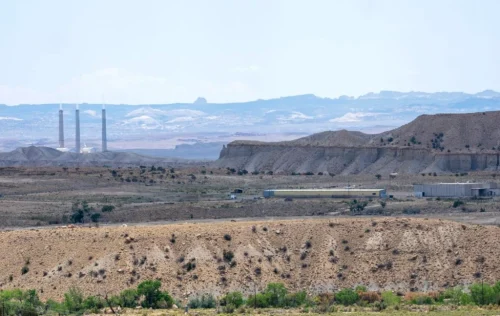
Drive east out of Provo on Highway 6, up through Spanish Fork Canyon, and after about ninety minutes the road drops you into a wide valley of mesas and sage. Price sits at the bottom of that valley — 5,500 feet, population roughly twenty thousand, the county seat of Carbon County, Utah. Most people who have heard of Price have driven through it on the way to Moab. The nightly news weather report knows us as one of the dots on the map somewhere between Provo and Green River. That is roughly the level of national awareness we get, and it suits us. The town was built on coal, and the coal seams that run under these mesas powered a good stretch of American industry through the twentieth century.
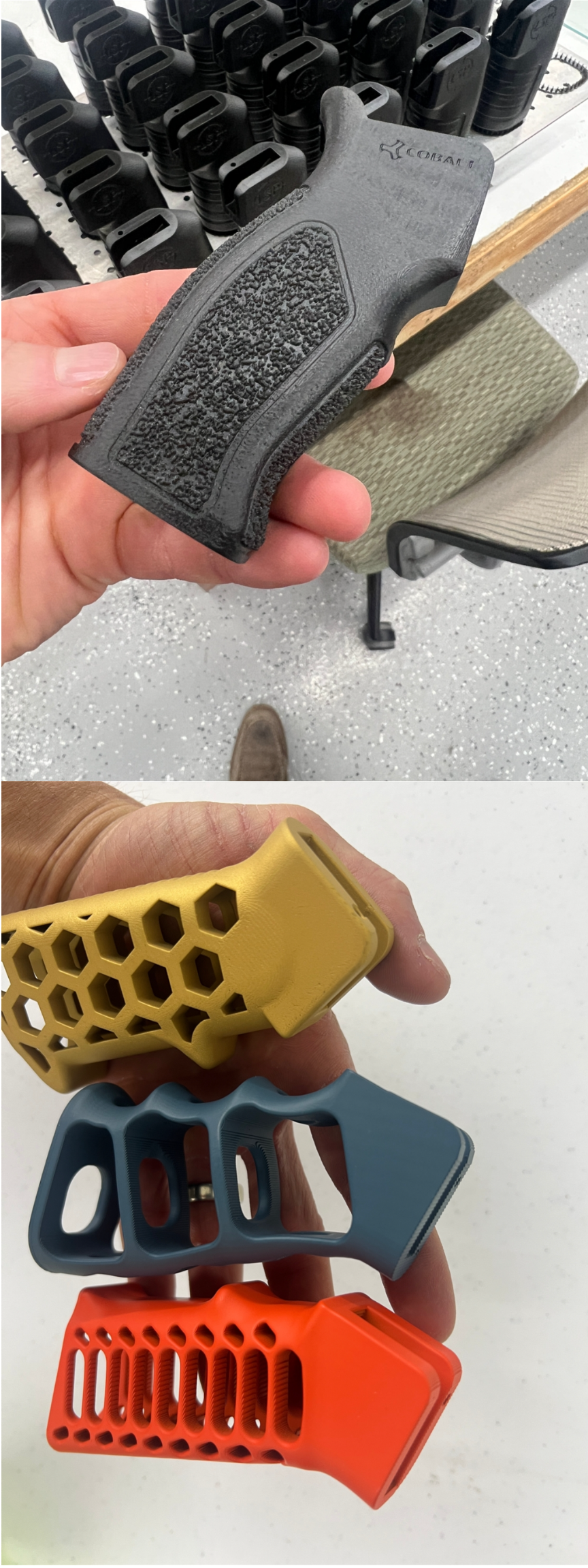
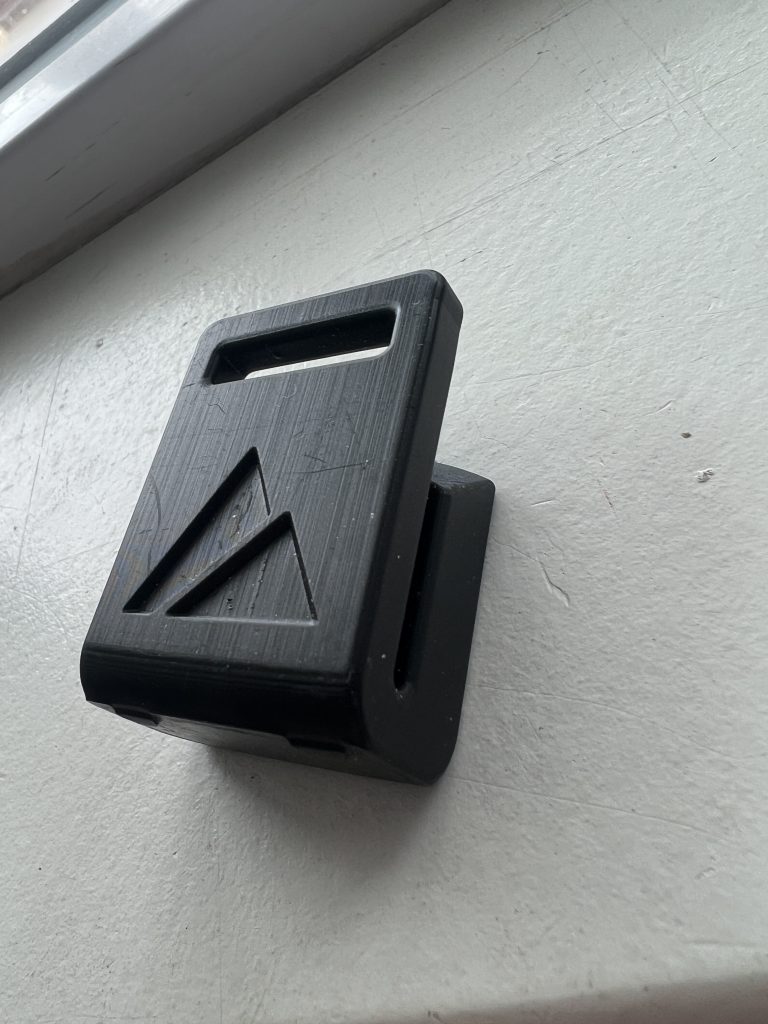
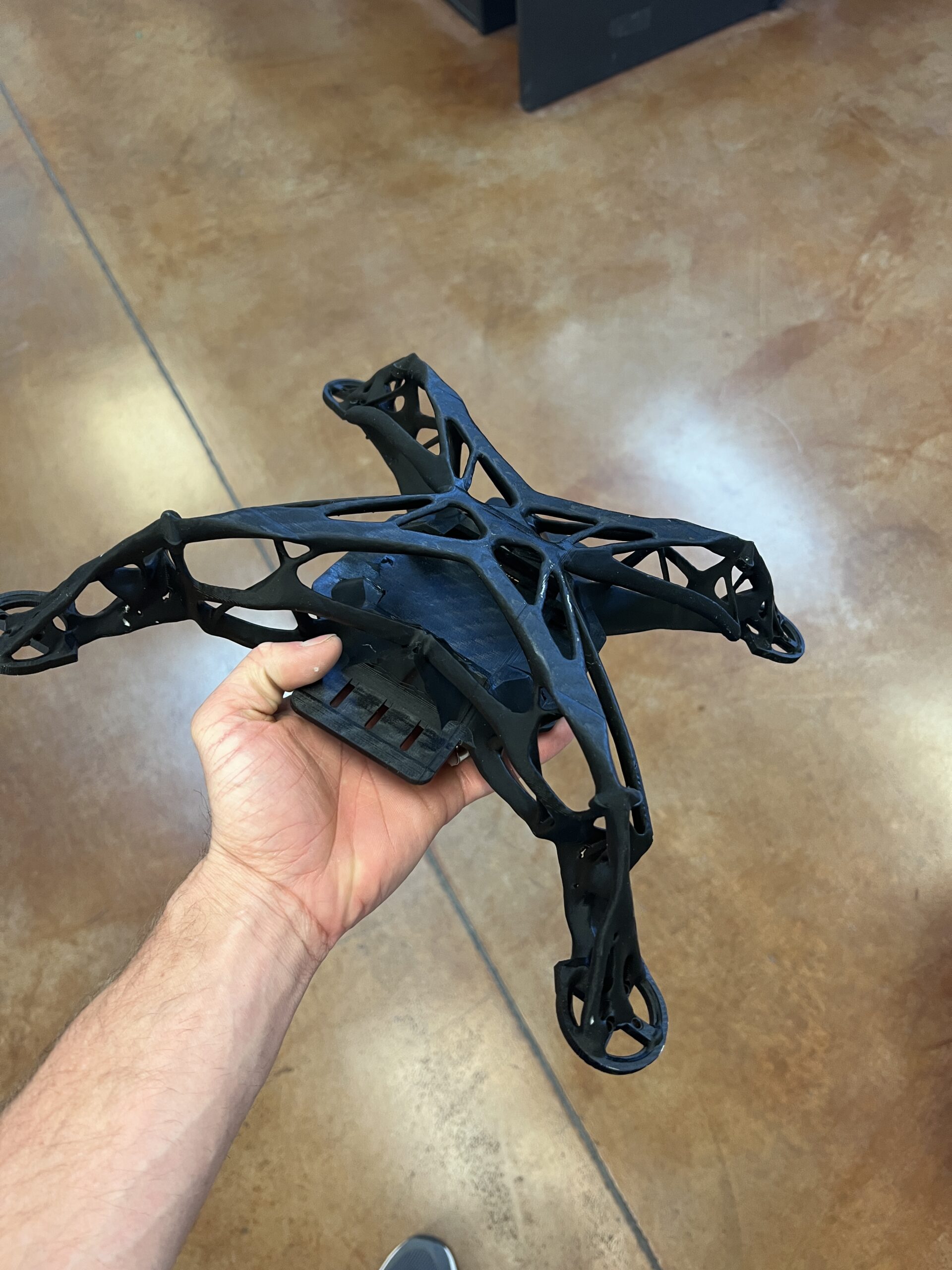
Our shop is here. On any given morning, before the sun clears the ridge, printers are already running batches — nylon powder sintering under a laser bed, resin curing off an LCD screen, parts destined for customers in states none of our neighbors have ever been to. The address on the packing slip is Price, Utah. That still surprises people.
Why we built here, honestly
The honest answer starts with the fact that Spencer and I both grew up in this area. Carbon County is home. Our parents worked here. Our friends’ parents worked here. When the coal industry that anchored the region for a century began winding down, that was not an abstract policy story to us — it was watching a place we love face the question every rural county with a single-industry economy eventually gets asked: what comes next?
Advanced manufacturing is a real answer to that question. Not the only one. But a real one. The habits of industrial work are already here. The families are already here. What has been missing is the kind of employer that can put those habits and those families to work on something the future is going to need more of, not less. We built the shop because we wanted to be part of the answer to that question, in the place we are from, for the people we grew up with. That is the reason.
The rest is pragmatic support for the reason. Real estate and facility costs in Carbon County are a fraction of what they run on the Wasatch Front, let alone in a coastal metro. When you are running a production floor with fleets of printers, high-current electrical, ventilation, and enough square footage to actually palletize outbound shipments, the difference is significant enough to change what the business can afford to do.
The workforce is the bigger piece. Carbon County grew up around industrial work. Coal mining is skilled labor — mechanical, physical, hazardous, held together by attention to detail and shift-in shift-out reliability. Those habits transfer. A team that knows what it means to show up at 6 a.m., own a piece of equipment, and finish a shift the way it started does not need to be retaught the culture of a production floor. That culture is already here. It is what we hire into.
Freight was the other piece. US-6 runs through Price, linking I-15 at Spanish Fork to I-70 at Green River, and that corridor puts us within reasonable trucking distance of most of the intermountain West and, with a day or two of transit, most of the country. That was not a small thing when we were deciding whether a production shop could actually serve national customers from here.
What was harder than we expected
Certification. We are AS9100-certified, which is the aerospace quality-management standard built on top of ISO 9001. To hold that certification you host annual audits from an accredited registrar, and those registrars are typically based in metro areas. Convincing an auditor to drive four hours to Price, Utah is possible, but it is a conversation you have to have. The same is true of ITAR compliance work — that is the International Traffic in Arms Regulations, which governs defense-related manufacturing — where the assumption in most guidance documents is that you are within an hour of a major airport. We make it work. The infrastructure of certification is still built for a country whose factories all sit near coasts.
Recruiting engineering talent has been the hardest of the three. A mechanical engineer with additive experience can name a salary in Salt Lake or Provo that a rural shop cannot match on a straight cash basis. The pitch has to be different — ownership of the work, the pace of decision-making, the fact that you are not the fortieth engineer on a stack — and the pitch works, but it is a real recruiting problem and it does not go away.
Federal small-business support is the one that has surprised me most. Programs like SBIR (Small Business Innovation Research grants, the federal program that funds R&D at small companies) and MEP (the Manufacturing Extension Partnership, a network of state-level manufacturing support centers) are genuinely useful, but the wiring assumes you have easy access to a research university, an accelerator ecosystem, and a metro-based cohort of similar companies. The forms do not have a checkbox for “our nearest peer company is three hours away.” We have made it work, and Utah’s MEP office has been solid. But the default posture of federal small-business support is coastal, and rural manufacturers spend energy translating themselves into a language the programs were not written for.
What was easier than expected
Broadband. This is the surprise. Rural manufacturers around the country spend real energy fighting for the connectivity a modern production floor needs — file transfers of engineering data, remote monitoring on printers, ERP traffic, video calls with customers who are working through part revisions. Emery Telcom, the local telecom that has built fiber out across this stretch of Utah, has put gig-speed service in reach at reasonable cost. That is not a given in rural America. It is one of the quiet reasons a shop like ours works here at all.
Community. This part is not sentimental, it is functional. When a local government is fielding a manufacturing recruit, they can actually pick up the phone. Permits move. Utility questions get answered. That is not universally true in bigger jurisdictions, and it matters more than it looks like it should when you are trying to bring a facility online.
Retention. We do not have the kind of turnover you see in metro manufacturing labor markets, where a wage bump twenty minutes down the road pulls people out the door every quarter. People here take a job with intent to stay. That changes how you train, how you build skill, and how deep you can let responsibility sit with a shift lead who has been running a fleet of printers for two years.
Vendor loyalty. Our material suppliers, our tooling vendors, our maintenance partners — the relationships tend to be long. Rural business has a memory. If you are square with people, that goes both ways.
What “reshoring” actually looks like from here
Reshoring is a word that gets used loosely, so it is worth being specific about what it means at ground level. We have parts running through our shop right now that used to be tooled overseas — polymer components for industrial equipment, consumer products, defense-related hardware — and they are being printed in production quantity from Carbon County instead. That means the tooling cost that used to be spent in a container is now spent on payroll in Price. It means the lead times customers used to wait twelve weeks on now run a fraction of that. It means the property-tax base of a rural county picks up a manufacturing address it did not previously have.
None of that is a slogan. It is the economics of what happens when the cost of additive at production scale finally lines up with the cost of overseas tooling for a real category of parts. It is not going to reshore everything. It will reshore a specific class of components, in specific volumes, made in specific ways. Some of those parts are going to be made in Carbon County. That is a real thing.
What still needs work
The engineering-talent pipeline. Rural Utah loses too many of its capable graduates to metro job markets because there is no clear path back. State universities do good technical work, and the Utah State-Eastern campus is right here in Price. The missing piece is a set of employers big enough, and coordinated enough, to make it a real career path for a graduate to come home. We are one shop. It will take more than one.
Rural manufacturing incentives at the state level that go beyond the opportunity-zone designation. Opportunity zones are useful. They are not sufficient. What actually moves the needle is workforce training funding, capital-equipment financing that understands additive manufacturing, and a state-level willingness to underwrite the kind of infrastructure — broadband, industrial power capacity, road access — that lets a rural manufacturing sector actually grow rather than just exist.
Coal and additive
People sometimes assume that the transition from coal to advanced manufacturing in a place like this is a symbolic one, a matter of narrative. It is not. It is an inheritance. The habits of industrial work — the shifts, the equipment discipline, the culture of getting a job done — were built here by generations who did it in a mine. Additive manufacturing at production scale asks for the same thing in a different form: fleets of machines that need to run, batches that need to come off cleanly, parts that need to leave the dock on schedule.
The region that built the coal that powered American industry is building the parts that go into the next generation of American manufacturing. That is not nostalgia. It is the same workforce, the same country, doing what it has always done, in a form the moment calls for. We are trying to be a decent example of what that can look like.
Ready to see what your part would cost? Upload a CAD file for an instant estimate, see what we run on our capabilities and materials pages, or talk to a real person about your project.